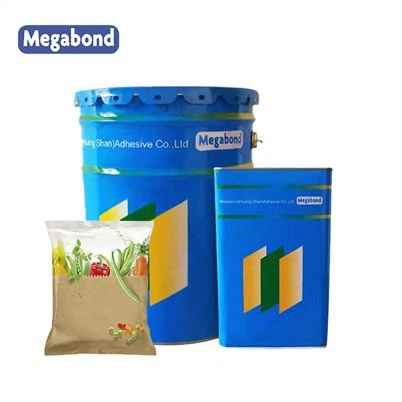
Efnin sem notuð eru í sveigjanlegar umbúðir should be safe from different points of view. Food is not allowed to be in contact with external contaminant like bacteria, viruses, other microorganisms, dirt, so the microstructure of the package materials must not allow this dangers to pass through and contaminate food.
Pólýprópýlen hefur netlaga kristalla uppbyggingu sem er notað fyrir agóð hindrun fyrir gas og aðskotaefni. So the polymers of polypropylene are widely used in food packaging, conferring a good protection. But some migrants could pierce the macromolecular structure of polymers and could contaminate the food stuff. Such migrants could be mainly the components of printing inks and of polyurethane adhesives.
Pólýúretan lím are a mixture of two polymers that reacts as temperatures around 30 to 50 degrees celsius. These two components suffer a polymerization process, and it strengthens.
Svo, þetta lím er notað fyrirtengja prentuðu fjölliðuna við málmhúðaða fjölliðu.It is known that for package food in wraps, and bags, are used laminates. Preferred materials for food packaging often consist of a first substrate, such as a film, which is generally thin and transparent (about 30 microns), and can be printable, and a second substrate which can be another type of material often is thinner film about 20 microns, a metal foil, a metallised film or a transparent film.
Notkun hvarfgjarnra pólýúretanlíma hefur í sumum tilfellum leitt í ljós að innpakkað matvæli mengast með ó-hvarfað ísósýanötum og krabbameinsvaldandi arómatískum amínum, sem myndast við hvarf límhluta við raka frá matvælunum. Þannig,húðunarþyngd límsins used in lamination will be not higher than 1.5-5g/m². food packaging materials may release migration compounds which result from the adhesives used in manufacturing such materails.